About Me
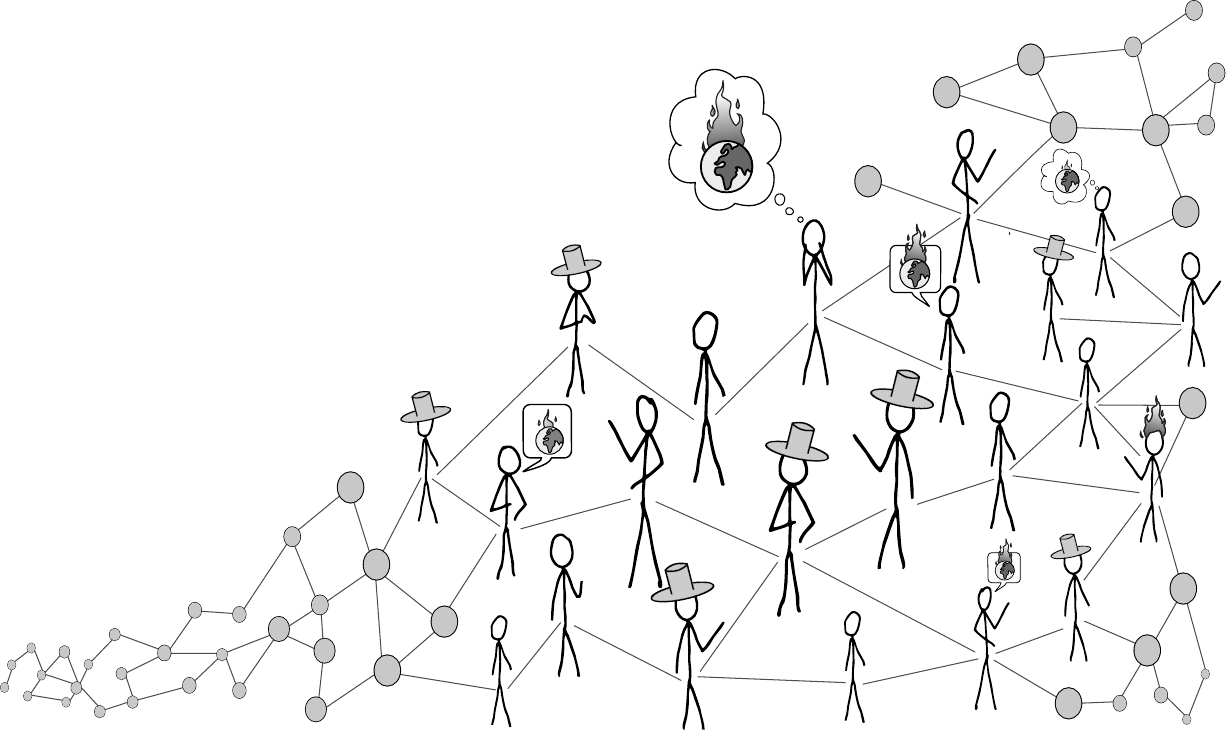
We live in a time of deep political and societal transformation with disagreements about how to mitigate or adapt to climate change, reduce growing inequality, manage migration and foster diversity underlying many of the social dynamics. Indeed, we observe growing polarisation about such questions, more and more identity-driven discourse, and a rise in authoritarian sentiment. What drives these trends? And how do our individual beliefs shape—and get shaped by—our social environments?
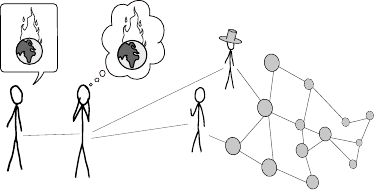
Currently, I am interested in individual-level belief systems: how belief systems provide people with feelings of coherence or dissonance for example when they face new information, how people adapt their belief systems in social contexts, and how the structure of belief systems can grow increasingly different between individuals. In sum, I aim to explore how changing and heterogeneous belief systems contribute to societal patterns like consensus, fragmentation, or perceived polarisation.
Previously, I explored how cognitive biases (e.g., biases related to social identity or confirmation bias) and ambiguous communication affect societal opinion dynamics — sometimes in quite unexpected ways. Before shifting to the social sciences, I had studied physics and applied mathematics and did some work on climate modelling. I was always and continue to be fascinated by the fuzzy overlap between the natural and social sciences regarding the science of climate change.
Research Projects

Heterogeneous & adaptive belief networks
Modelling study
People can change both their beliefs and the way they see relations between beliefs. Do people then develop different belief system structures? Can this explain why the effectiveness of belief interventions differs or why we often seem to perceive political things so differently? Our modelling work will provide insights about the consequences of co-evolving beliefs and belief networks.
ongoing
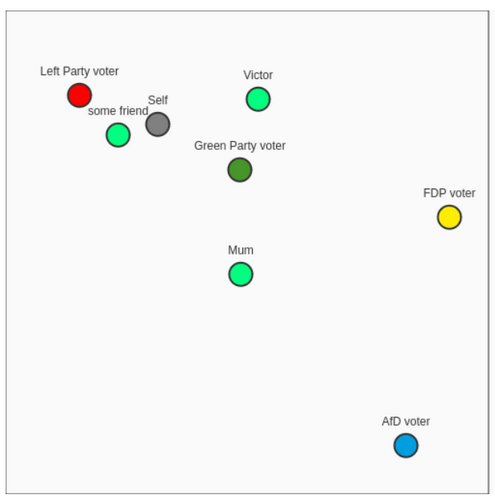
How do people perceive political distance and similarity?
Survey and Data Analysis
People are quite used to translate disagreement or agreement on a set of opinions with someone to how politically distant or similar they perceive another person or party. We hypothesise that individuals weigh disagreement on some topics higher than on others, but that they do not all agree on these weights. Our survey aims to test this hypothesis and explore how people perceive political distance in subjective, heterogeneous and often asymmetric ways.
ongoing
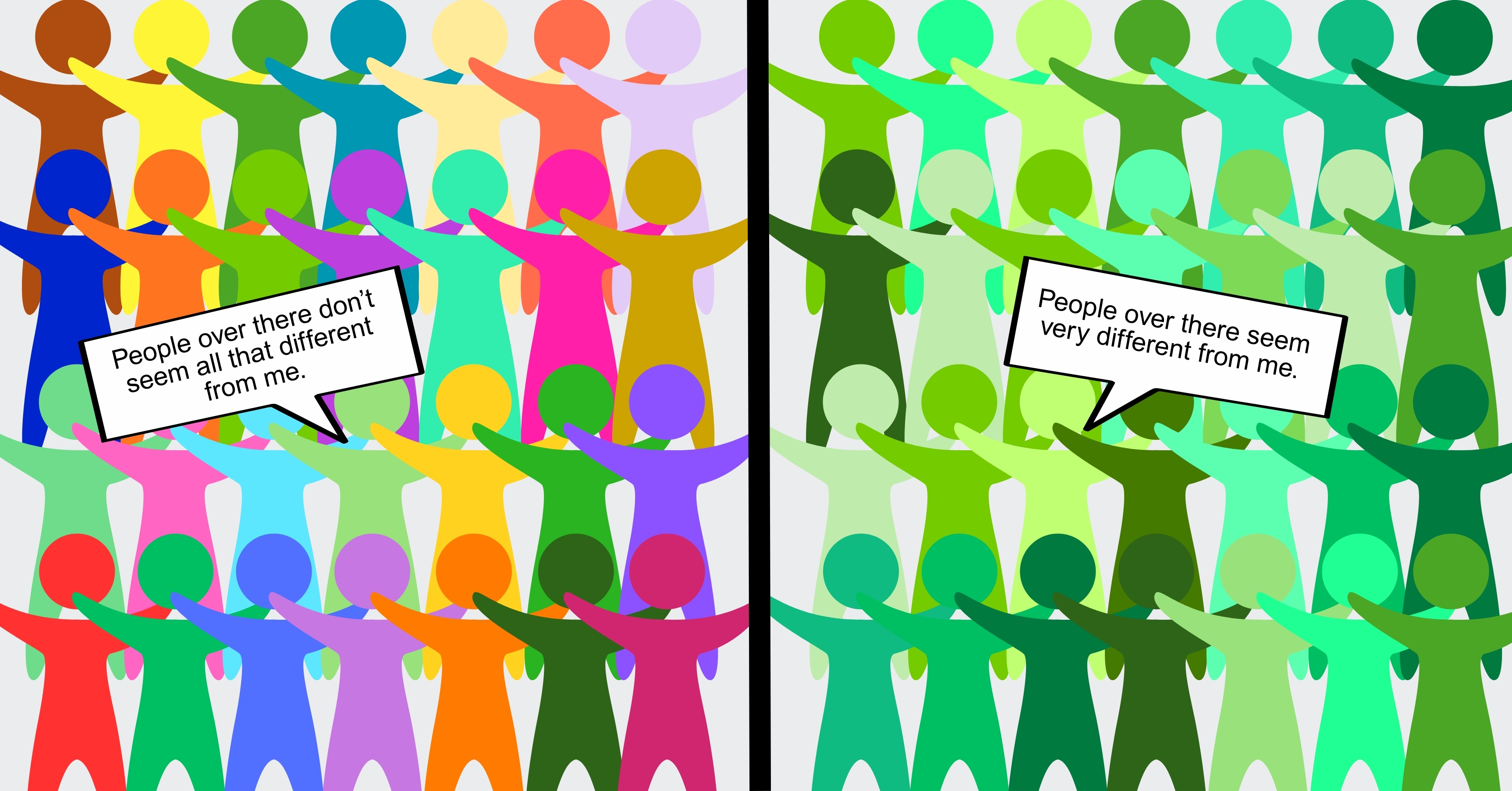
Perceived polarisation
Modelling and Data Analysis
When groups grow more uniform about a specific topic, opposing views seem more extreme to them. Individuals subjective experience of polarisation in the overall society might thus be amplified, at least greater than actual opinion divergence suggests. We formalise this idea and analyse how Germans might have perceived polarisation on climate change opinions. Perceived polarisation can deviate substantially across groups and vary over time.

Social Influence Curves
Data Analysis and Modelling
...
ongoing
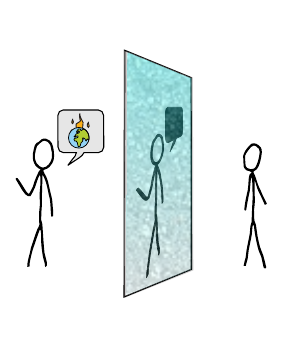
The Interplay of Ambiguity and Bias in Opinion Dynamics
Modelling and Literature Review
Different types of noise affect opinion dynamics in quite different ways: increase polarisation, promote agreement through compromise, but even promote more extreme consensus, given the right conditions. Noise is often overlooked or insufficiently dealt with in social dynamics models but it can be critical and surprising.
[Paper in Royal Society Open Science, Opinion Piece "Make some noise!"]
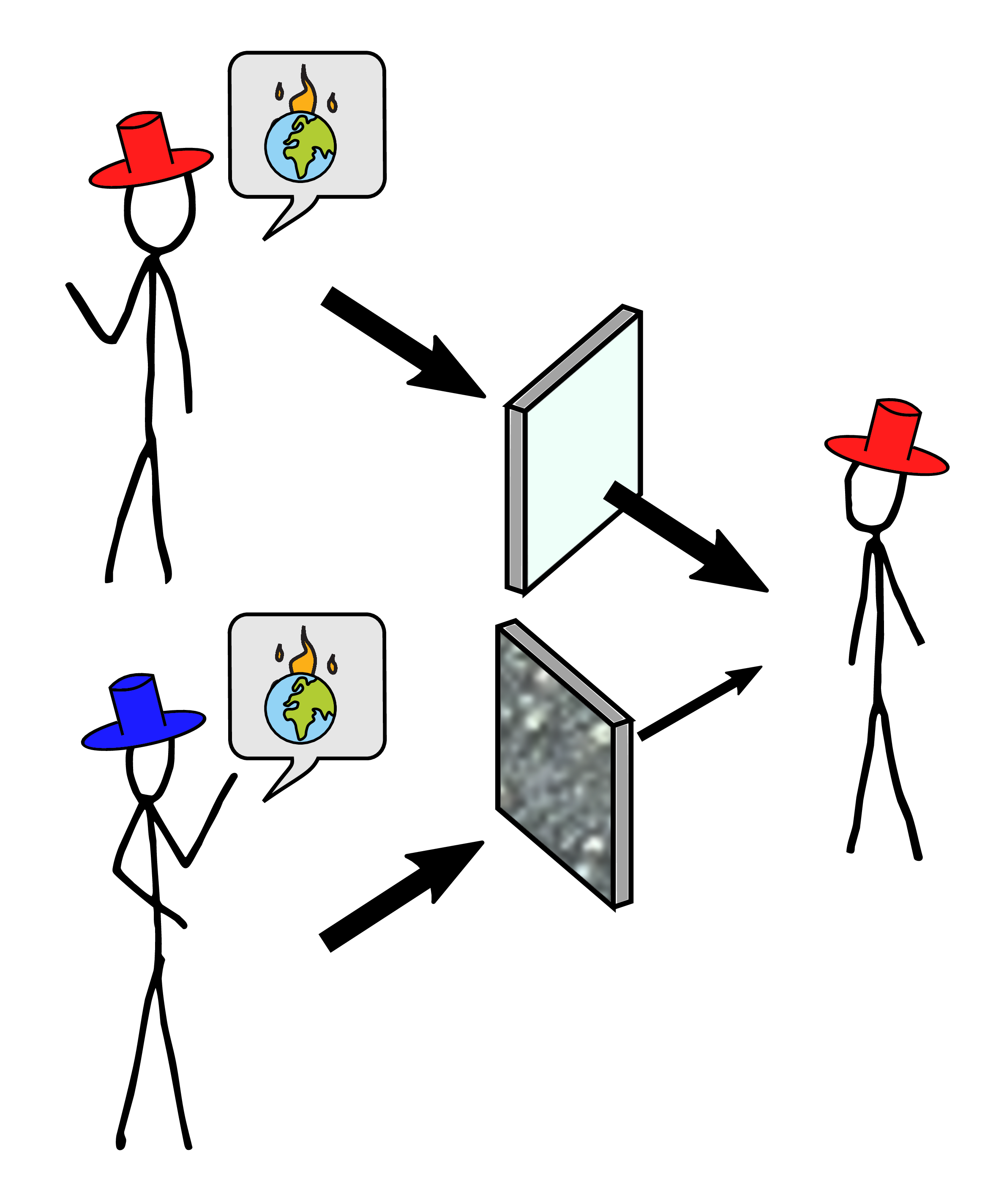
Social Identity Bias and Polarisation
Modelling study
We model how social identity biases undermine how individuals update opinions through social influence. The model illustrates that these biases can either hinder or, quite counter-intuitively, promote consensus, and that this depends on how structured the interaction networks both within and between groups are.
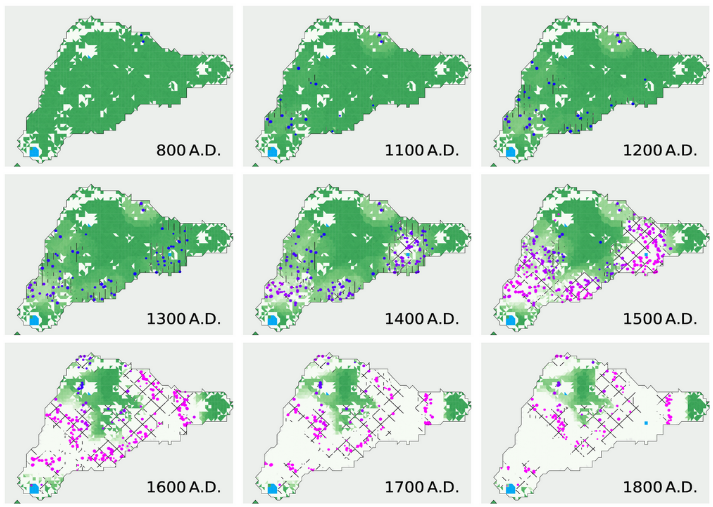
Modelling population dynamics and deforestation patterns on Easter Island
Masterthesis on socio-environmental modelling @ ZMT
We develop an Agent-Based model incorporating real geography, individual behaviours, and dynamic agent-environment interactions to explore Easter Island's pre-European settlement and deforestation patterns. This approach allows testing hypotheses about spatio-temporal dynamics that previous models overlooked.
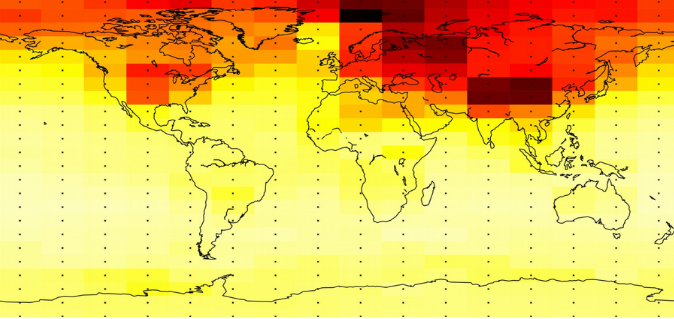
Global Warming through anthropogenic heat flux
Masterthesis on climate modelling @ PIK
Anthropogenic heat describes any type of energy that humans use and add to the energy balance of the earth system, i.e. energy that would not become heat anyway. This includes fossil fuels, but also any form of energy from nuclear fusion/fission. I estimate the climate impacts of this anthropogenic heat flux using climate models, including temperature anomalies and its feedbacks with ice melt and ocean circulation.
My Path
| PostDoc | 2024– |  |
Heterogeneous and adaptive belief networks | Mirta Galesic, Henrik Olsson |
| PhD | 2020–2024 |


|
Distorted social perceptions and opinion formation | Agostino Merico, Paul Smaldino |
| M.Sc. | 2018–2020 |


|
Computer Simulations in Science and Engineering (COSSE) | |
| M.Sc. | 2017–2018 |


|
Climate Physics | Georg Feulner, Maria A. Martin |
| B.Sc. | 2012–2016 |


|
Physics | Uli Katz, Apostolos Voulgarakis |
Contact